
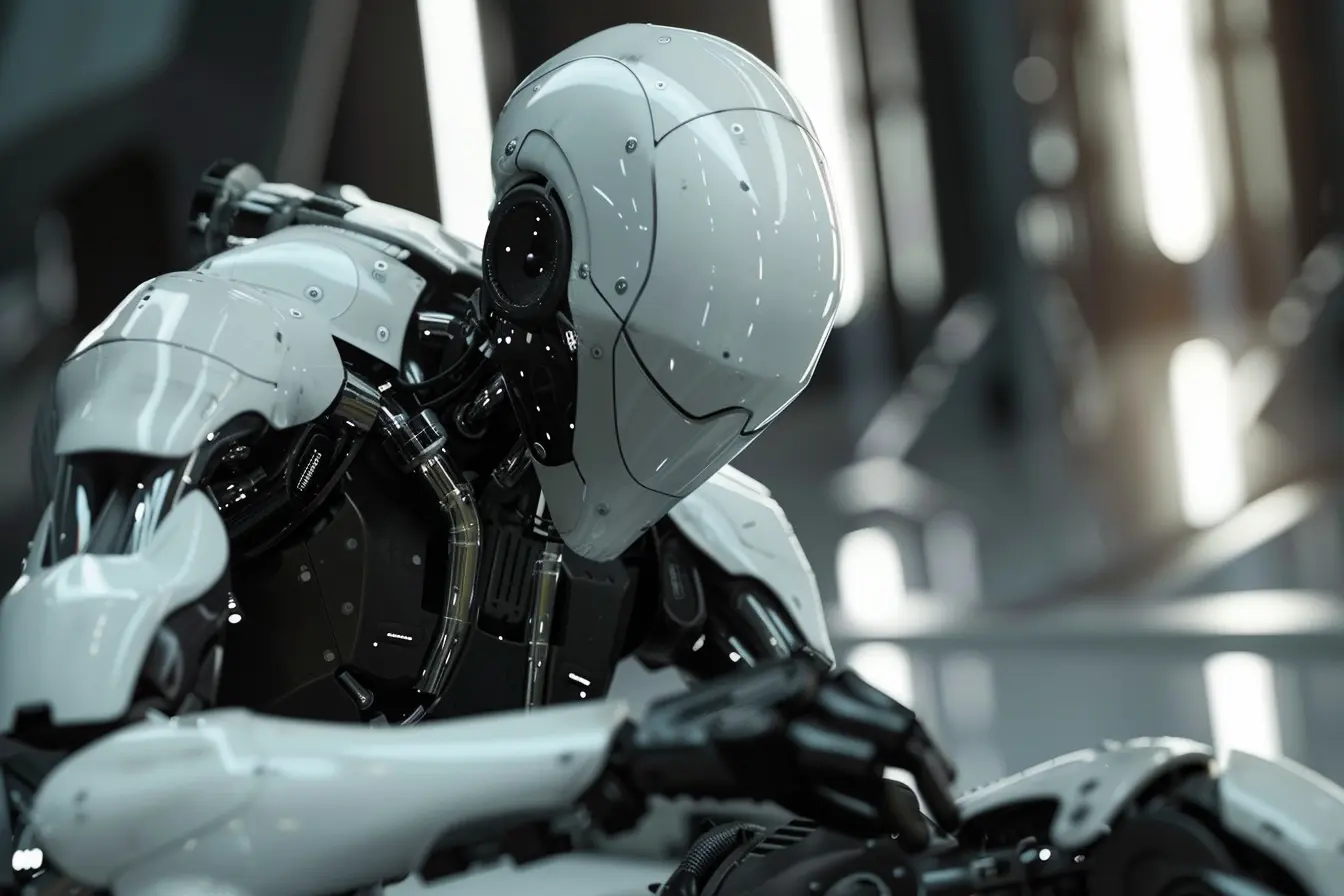
Physical AI and robotics are moving much faster in 2026 than many people expected. Robots are no longer only machines that repeat one fixed job. They are now becoming smarter, more flexible, and more useful in real places like factories, warehouses, hospitals, and delivery centers. The International Federation of Robotics (IFR) says the global market value of industrial robot installations reached an all-time high of US$16.7 billion, and industrial robot installations in 2024 hit 542,000 units, with 4,664,000 robots in operation worldwide. In service robots, the IFR says professional service robot sales grew 9% in 2024, while medical robots grew 91%.
This growth is not happening by chance. It is driven by better AI models, more powerful simulation tools, digital twins, and a bigger need for automation in jobs where speed, safety, and consistency matter. In simple words, robots are becoming more useful because AI is helping them see, think, learn, and act in the real world.
What Physical AI Means
Physical AI is a way to build AI for the real world, not only for text or images. NVIDIA defines Physical AI as systems like cameras, robots, and self-driving cars that can perceive, understand, reason, and perform complex actions in the physical world. That is a big step beyond older robots, which often needed very strict programming and could only do one narrow task.
The key idea is simple: a robot should not only move. It should also understand what is around it, notice changes, and make a good decision. This matters in real life because the real world is messy. People move, boxes change shape, light changes, and objects are not always in the same place. Physical AI helps robots handle those changes better. NVIDIA also explains that Physical AI uses simulation, synthetic data, world models, and reinforcement learning so robots can learn in a safe virtual space before they work in the real one.
Why 2026 Is a Big Year
One major reason 2026 stands out is that the robotics industry is now building around AI training pipelines, not just hardware. At CES 2026, NVIDIA announced new open models, frameworks, and AI infrastructure for Physical AI, saying these tools are meant to speed up the full robot development cycle and help build robots that can learn many tasks. In March 2026, NVIDIA also announced a Physical AI Data Factory Blueprint to help generate, augment, and evaluate training data more efficiently.
This matters because training data has been one of the biggest limitations in robotics. Robots need a lot of high-quality examples to learn safely. NVIDIA says collecting this data in the real world can be tedious, error-prone, dangerous, and expensive, which is why simulation and synthetic data are becoming so important. In 2026, that gap between “lab demo” and “factory use” is getting smaller.
Robots Are Growing in Real Industry, Not Just in Demos
The strongest growth is still in industrial use. IFR reports that industrial robot demand has more than doubled over the past 10 years, and annual installations have stayed above 500,000 units for four straight years. Asia remained the largest region for new deployments in 2024, with 74% of installations, showing how deeply robotics is now tied to manufacturing and supply chains.
But robotics is not only about factory arms anymore. Service robots are growing very fast, too. The IFR says professional service robot sales reached almost 200,000 units in 2024, and medical robots had especially strong growth. The report also says the robot-as-a-service fleet grew 31% to more than 24,500 units, which shows that many companies now prefer flexible robot services instead of buying everything upfront. That is a major business shift for 2026.
Warehouses and Logistics Are Leading the Way
One of the fastest-growing areas is warehousing and logistics. The IFR says transportation and logisticsweres the top application group for professional service robots in 2024, and more than any other professional service robot sold that year was built to move goods or cargo. This fits the huge pressure on supply chains, online shopping, and faster delivery times.
In March 2026, FANUC America said it would show robotic and AMR solutions for warehousing and logistics at MODEX 2026, describing practical systems for supply chain professionals. That is a good sign of where the market is going: robots are no longer only a future idea. They are now part of everyday warehouse planning.
Factories Are Becoming Smarter
Factories are changing from simple automation to smarter automation. The old model was to build one robot for one job. The new model is to use AI, simulation, and digital twins so robots can be tested and adjusted before they touch real production. NVIDIA says major robotics leaders like FANUC, ABB Robotics, YASKAWA, and KUKA are integrating Omniverse libraries and Isaac simulation frameworks into virtual commissioning tools so they can validate robot applications and full production lines using physically accurate digital twins.
This is important because factory robots must be reliable. A small mistake can stop production, damage goods, or create safety problems. Virtual testing helps companies find problems earlier and reduce risk. That is why digital twins are becoming a central part of modern robotics in 2026.
Humanoid Robots Are Getting More Serious
Humanoid robots are also getting a lot more attention in 2026. NVIDIA says the next wave of robotics includes “generalist-specialist robots” that can learn many tasks more quickly. Universal Robots and Scale AI announced the UR AI Trainer in March 2026, and they described it as a shift from pre-programmed robots to AI-driven tasks, using training cells where robots imitate humans. That shows how quickly the field is moving from fixed routines to learning systems.
A lot of excitement around humanoids comes from a simple idea: one robot could do many different tasks instead of only one. That could help in warehouses, factories, and service jobs where work changes often. It is still early, and many humanoid systems are not yet ready for every real-world job, but 2026 is clearly a year when this idea is becoming much more practical.
Healthcare and Medical Robots Are Rising Fast
Healthcare is another major growth area. The IFR reports that medical robot sales grew 91% in 2024, reaching close to 16,700 units. That is a very strong jump and shows how hospitals and clinics are using more robotic support for precise work and assistance tasks. The IFR also links this trend to demographic change and the growing need for medical help and automation.
This is easy to understand. Many health systems are under pressure from staff shortages, rising patient numbers, and the need for better precision. Robots can help with repeated or delicate tasks, while people stay focused on care and decision-making. In simple terms, robots are not replacing care workers as much as helping them do more with less strain.
Why Companies Want Physical AI Now
Companies like Physical AI because it can improve speed, safety, and flexibility. A robot trained with AI can often adapt better than a robot that follows only one fixed script. That is valuable in warehouses, factories, hospitals, and outdoor spaces where conditions often change. NVIDIA says Physical AI is especially useful in smart spaces like factories and warehouses, where many people, vehicles, and robots move at the same time.
The business case is also stronger now because more firms can use robots as a service, not only as a big capital purchase. IFR says the RaaS fleet grew 31% in 2024, which suggests many businesses want more flexible ways to scale robot use up or down. That fits a world where demand can change quickly, and companies need automation that can grow with them.
What Is Still Hard
Even with all this progress, Physical AI and robotics still face hard problems. Robots need large amounts of good data, accurate simulation, strong safety testing, and dependable real-world performance. NVIDIA says real-world data collection can be expensive and dangerous, which is why simulation and synthetic data are so important. That means the industry still has a lot of technical work ahead, even though the direction is clear.
There is also a human side to the change. Companies must train workers, redesign workflows, and make sure robots fit into existing operations. Robotics is not just a machine purchase. It is an operational change. The companies that succeed in 2026 will likely be the ones that treat robotics as a full system, not as a single gadget.
The Future Looking Ahead
The direction for the rest of 2026 is clear. More robots will be trained with simulation, more systems will use digital twins, more warehouses will add AMRs, more factories will test virtual commissioning, and more medical robots will enter real use. NVIDIA’s 2026 announcements and the IFR’s latest numbers both point to the same big idea: robotics is shifting from narrow automation to AI-powered physical work.
In simple words, Physical AI is helping robots become smarter in the real world. They are learning to see better, move better, and handle more kinds of work. That is why 2026 is a major year for robotics growth, and why many experts see this as the start of a much bigger robotics wave.
Conclusion
Physical AI and robotics are growing fast in 2026 because the technology has finally reached a more useful stage. The hardware is better, the AI is smarter, the simulation tools are stronger, and the demand from industry is real. Industrial robots, service robots, warehouse robots, medical robots, and humanoid systems are all moving forward at the same time. The result is a fast-changing market where robots are becoming more practical, more flexible, and more common in daily work.
For more, visit Techfuture360.site.