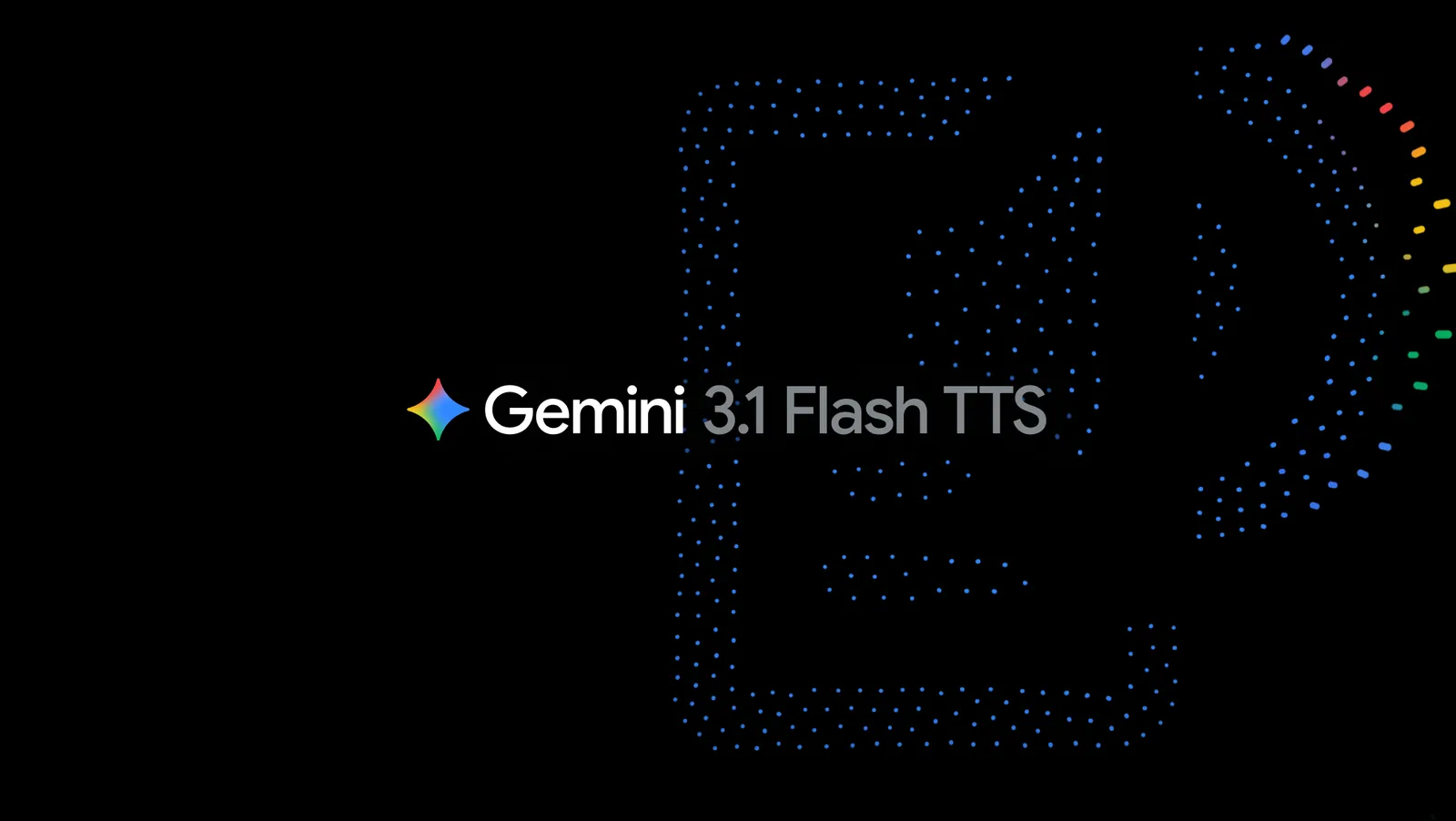
Google has launched Gemini 3.1 Flash TTS, a new text-to-speech model for AI voice generation. According to Google’s official announcement, the model was introduced on April 15, 2026 and is designed to improve speech quality, control, and expressiveness. Google says it is meant for developers, enterprises, and everyday users who want to build stronger AI voice experiences.
What Gemini 3.1 Flash TTS is
Gemini 3.1 Flash TTS is Google’s newest audio model for turning written text into spoken audio. In simple words, it helps AI speak more naturally and with better style. Google describes it as its latest text-to-speech model with improved controllability, expressivity, and quality. The goal is not just to read text out loud, but to make the voice sound more human, more flexible, and more useful in real products.
This matters because many AI voice tools can speak clearly, but they still sound flat or robotic. Google is trying to move beyond that. With Gemini 3.1 Flash TTS, the company is focusing on speech that can sound more natural, match different tones, and fit different use cases. That makes it useful for apps, customer support tools, learning platforms, media creation, and many other voice-based products.
Why this launch is important
AI voice generation is becoming a bigger part of modern technology. People now expect AI to not only answer text questions, but also talk, explain, guide, and present information in a natural voice. Google’s new model is part of that bigger shift. It is meant to help people build the next generation of AI speech applications, where voice is not just an extra feature but a main part of the experience.
Google also says the model performs better in quality benchmarks. On the Artificial Analysis TTS leaderboard, Gemini 3.1 Flash TTS reached an Elo score of 1,211, which Google uses as proof that the model is strong in blind human preference testing. That does not mean it is perfect for every use case, but it does show Google is positioning this release as a serious upgrade in the AI speech space.
What is new in Gemini 3.1 Flash TTS
The biggest new feature is audio tags. Google says these tags let users control vocal style, pacing, and delivery in a much more detailed way. In simple terms, you can guide how the AI should speak, not just what it should say. That means you can shape the voice to sound more serious, more energetic, slower, faster, or more expressive depending on the situation.
Google also says the model supports natural language commands inside the text input, which gives developers more control over the final speech output. This is important because it makes the system easier to direct. Instead of needing complicated settings, users can guide speech in a way that feels closer to normal writing. Google calls this the “director’s chair” style of control in its AI Studio experience.
Another major improvement is overall speech quality. Google says Gemini 3.1 Flash TTS is its most natural and expressive speech model so far. That means the audio should sound more realistic, smoother, and less mechanical than older versions. For any product that depends on voice, this kind of improvement can make a big difference in how people trust and enjoy the experience.
Languages and global use
Google says Gemini 3.1 Flash TTS supports more than 70 languages. This is a big advantage because voice AI is not useful only in English. Many businesses and creators need voices that can work across regions, accents, and local languages. A model with broad language support can help teams build products for a global audience without starting from scratch each time.
Google also says the model is built for global scale and includes more precise style, pacing, and accent control. That means it is not just for one market or one type of voice. Instead, it is designed for localization, which is important for companies that want to make their apps sound natural in different countries. This is one of the strongest signs that Google is thinking beyond a demo and toward real-world deployment.
Where people can use it now
Google says Gemini 3.1 Flash TTS is rolling out in preview in several places. Developers can use it through the Gemini API and Google AI Studio. Enterprises can access it through Vertex AI. Google Workspace users can also use it through Google Vids. This makes the release more practical because it is not locked into one small product area.
This wide rollout also shows how Google wants the model to be used in different ways. Developers can test new voice features, companies can build customer-facing tools, and Workspace users can create richer content inside Google’s own products. That is a smart strategy because it lets one model serve many different audiences.
Safety and trust
Google says all audio from Gemini 3.1 Flash TTS is watermarked with SynthID. This is important because AI-generated voice can be misused if people cannot tell whether a clip is real or synthetic. Watermarking helps identify AI-made audio and supports trust and safety. Google has tied this release to misinformation prevention as part of its official messaging.
In simple English, this means Google is not only trying to make AI voices better, but also trying to make them easier to identify. That is a key issue in 2026 because voice cloning, fake audio, and misleading recordings are serious concerns. A watermark does not solve every safety problem, but it is a meaningful step toward more responsible AI voice tools.
How this fits into Google’s bigger AI plan
Gemini 3.1 Flash TTS is not a standalone announcement. It is part of a wider wave of Google AI updates around the same time. Google also announced Gemini 3.1 Flash Live, which it describes as its best audio model to date for real-time conversation, and says it is already available in more than 200 countries through Search Live and Gemini Live. Around the same period, Google also introduced changes like new Gemini API billing controls and other product updates.
This shows a clear direction. Google is building a full AI stack where models, developer tools, apps, and business products all connect with each other. In that stack, voice is becoming more important. The company seems to want AI that can read, speak, listen, and act in a more natural way, instead of staying limited to text chat only. That is an inference based on the pattern of these releases, but it is strongly supported by the official announcements.
What this means for developers
For developers, Gemini 3.1 Flash TTS is useful because it offers better control and easier workflow integration. If someone is building an app that needs voice narration, audio learning content, interactive assistants, or local-language speech, this model gives them a newer option from Google’s ecosystem. The fact that it is available through Gemini API, AI Studio, and Vertex AI makes it easier to test, deploy, and scale.
The audio tags are especially useful in development. They let creators direct speech with more detail, so the final voice can better match the app’s purpose. For example, one voice might need to sound calm and instructional, while another might need to sound lively and friendly. Google’s new system is built to support that kind of control.
What this means for businesses and creators
For businesses, the model can help improve customer support, training content, product demos, and multilingual experiences. A company can use speech that feels more natural and better matches its brand style. That can make the experience easier for users and more professional for the company. Google’s focus on enterprise access through Vertex AI makes this clear.
For creators, the model can make voice content faster to produce and easier to customize. This may be useful for videos, explainers, podcasts, e-learning, and accessibility tools. Google’s inclusion of Google Vids also suggests that voice generation is becoming more integrated into everyday content creation tools, not just technical developer platforms.
Final thoughts
Google’s launch of Gemini 3.1 Flash TTS is a strong sign that AI voice generation is moving into a more advanced stage. The model brings better speech quality, more expressive control, support for 70+ languages, and SynthID watermarking for safety. It is also rolling out across developer, enterprise, and Workspace tools, which makes it more than just a research demo.
In simple words, this update is about making AI sound better, feel more natural, and work at global scale. That is why it is important. It is not only a new model release. It is part of Google’s bigger move toward more useful AI speech, more controllable voice generation, and more practical tools for real users and real businesses. Based on the official announcement date, this is one of Google’s latest major AI voice updates as of April 15, 2026.
For more, visit Techfuture360.site.