How Agentic AI Is Changing the Future of Tech Work Today

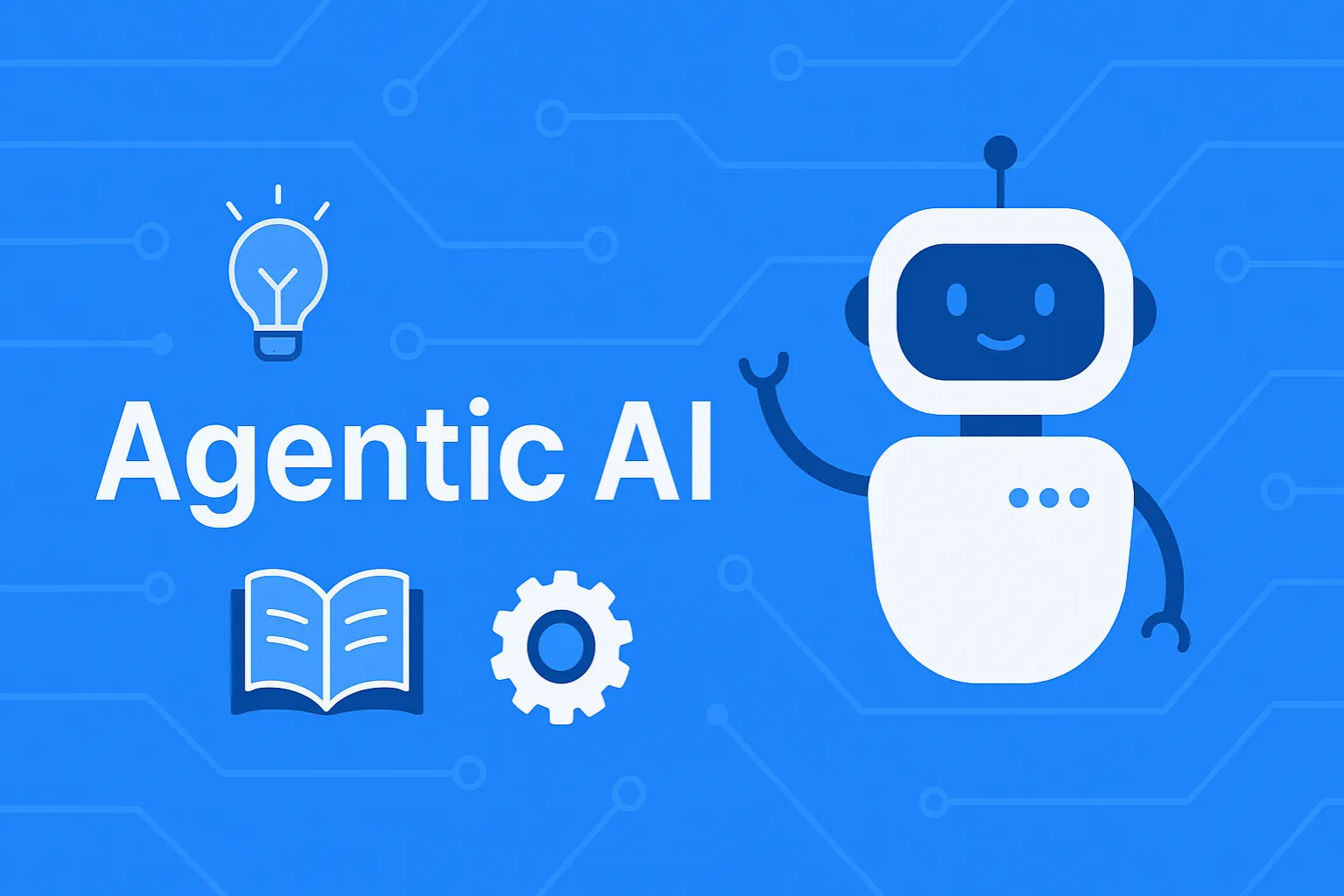
Agentic AI is changing tech work fast. In simple words, an AI agent is software that can work toward a goal, make plans, use memory, and take actions for a person instead of only answering a question. Google Cloud describes AI agents as systems that pursue goals and complete tasks on behalf of users, with reasoning, planning, memory, and some autonomy. Microsoft and OpenAI both say 2025 was the year AI agents moved from simple demos into real production use, with more teams delegating longer tasks to agents instead of prompting step by step.
This is important because tech work is no longer only about writing code or answering tickets. Microsoft says AI agents can act like “digital employees” and take on tasks such as support tickets and draft reports, while OpenAI says production-grade agents are now easier to run because models got better at planning, tool use, and long-horizon work. That means the job is shifting from doing every step by hand to designing, guiding, checking, and improving the work that AI does.
Table of Contents
ToggleWhat Agentic AI Means in Simple Words
Think of old AI as a smart helper that answers a question. Think of agentic AI as a helper that can also do the next steps. It can look up information, call tools, remember what happened before, and keep working until a goal is done. Google Cloud says agents can work with other agents too, which makes them useful for bigger workflows and complex tasks. Google’s architecture guide also says agents are best for open-ended problems, multi-step workflows, and knowledge-heavy work where some autonomy is useful.
That difference is why agentic AI feels like a turning point. It is not only helping people write faster messages or summarize text. It is starting to sit inside real work systems, where it can help move tasks forward, connect steps, and support decision-making. OpenAI’s 2025 developer roundup says the big shift was from “prompting step-by-step” to delegating work to agents.
Why Tech Work Is Changing So Quickly
The wider job market is already shifting around AI, and tech work is right in the middle of it. The World Economic Forum’s 2025 Future of Jobs report says 170 million new jobs could be created by 2030 while 92 million may be displaced, for a net gain of 78 million jobs. The same report says 63% of employers see the skills gap as the biggest barrier to transformation, and 77% plan to upskill workers while 41% plan to reduce workforce where AI automates tasks.
For tech workers, the message is clear: the task mix is changing. Some repetitive work is being automated, but demand is rising for people who can design systems, guide AI, check results, and work across tools. The WEF says AI, big data, networks, and cybersecurity are among the fastest-growing skill areas, while human skills like creative thinking, resilience, flexibility, agility, analytical thinking, leadership, and collaboration still matter a lot.
Software Development Is Becoming More Agent-Led
Software development is one of the first places where agentic AI is making a visible difference. Microsoft says 15 million developers are already using GitHub Copilot, and agent mode plus code review are helping people code, check, deploy, and troubleshoot more smoothly. Microsoft also says developers are at the center of this change, because the new generation of tools is built around more capable agents and more connected workflows.
OpenAI’s business guide says software engineers are using AI for debugging, generating first-draft code, porting code between languages, and “rubber-ducking” their code. OpenAI’s 2026 Codex update adds that long-horizon coding agents became much more reliable by late 2025, which matters because real engineering work often takes many steps and many hours.
In plain terms, this means developers spend less time on boilerplate and more time on design, architecture, code review, testing strategy, security thinking, and deciding what the AI should do next. That is an inference from the sources, but it fits the pattern they describe: AI now handles more of the routine coding flow, while humans keep ownership of quality and direction.
Product, Data, Support, and Cyber Work Are Also Changing
Agentic AI is not just for programmers. OpenAI’s use-case guide says marketers and finance teams can build Python scripts, SQL queries, and visualizations, and product teams can build interactive prototypes faster. This shows that tech work is becoming more cross-functional. People who used to depend fully on engineers for every small data or prototype task can now do more themselves, with AI support.
Microsoft says agents can help with support tickets, draft reports, and even sales lead generation. That means tech teams and adjacent teams can use agents to reduce routine work and focus on the harder, more human parts of the job, like customer judgment, product strategy, and relationship building. Microsoft’s examples also show agents working across business systems, not just in chat windows.
Cybersecurity is another big area. Microsoft says agentic AI can detect, triage, and respond to threats faster, and can reduce alert fatigue by handling repetitive analysis. That is especially valuable in security, where teams are overwhelmed by too many alerts and too little time. So the future of tech work is not only “more coding with AI,” but also “more operations, support, and security with AI in the loop.”
The New Skills Tech Workers Need
The strongest skill set in this new world is a mix of technical skill and human skill. The WEF says the fastest-growing technical skills include AI, big data, networks, and cybersecurity, while human skills such as analytical thinking, cognitive skills, resilience, leadership, and collaboration remain core. That means the best tech workers will not be the people who use the most AI tools. They will be the people who can use AI well and still think clearly, check work, and make good calls.
Microsoft’s 2025 Agentic Teaming & Trust research adds a very practical point: high-frequency AI users were 1.9 times as likely to say their organization had people-centric AI practices, and the company found a 38 percentage-point gap between low and high frequency users around those practices. Microsoft also says about 45% of team impact from agentic AI can be traced back to how ready the team is to work with agents and how well they collaborate once agents are introduced.
That means training matters as much as the tool itself. Tech workers need to learn how to write clear instructions, check outputs, break work into steps, and decide when to trust the agent and when to take over. They also need to learn how to work in a team where some tasks are done by people and some by AI. Microsoft’s work trend report says employees should build AI literacy, learn how to develop and manage agents, and create paths for ongoing learning as human-agent teams reshape roles.
The Big Risks: Trust, Safety, and Overdependence
Agentic AI is powerful, but it is not magic. McKinsey says only 1% of business leaders report that their companies have reached AI maturity, and it warns that businesses still need trust, safety, and transparency as they move from pilots to real adoption. Google Cloud also says agentic systems should be chosen based on task complexity, latency, cost, and the need for human involvement. In other words, not every problem should be handed to an agent.
Microsoft’s new future-of-work research adds another warning: workplace monitoring and algorithmic management can raise stress and weaken trust unless workers help define what is measured and how the data is used. That matters because agentic AI often works best when teams are open, well trained, and part of the design process. If companies push agents too hard without trust, they may get short-term speed but long-term damage.
So the smartest approach is human oversight, not blind automation. People should set goals, review important outputs, and handle high-stakes decisions. Agents should do the heavy lifting on routine and multi-step work, but humans should stay responsible for judgment, ethics, and final approval. That balance is what makes agentic AI useful instead of risky.
What This Means for the Future of Tech Jobs
The future tech worker is becoming more like a builder, reviewer, and coordinator than a pure task doer. Microsoft says the next wave of work will blend human creativity with AI’s strengths, and it talks about a future where agents work across individual, team, and end-to-end business contexts. Google Cloud also says agents are well suited to automating knowledge-intensive tasks and managing complex workflows.
This does not mean people become less important. It means their value moves upward. Human workers will spend more time on problem framing, system thinking, product judgment, user needs, oversight, and quality control. The WEF report shows why this matters: companies expect AI to reshape business models, but they also plan to upskill workers, and human skills will remain critical even as technology skills rise.
Conclusion
Agentic AI is changing tech work today because it can do more than talk. It can plan, act, remember, coordinate tools, and carry work forward. The latest official reports show that this shift is already happening in software development, support, cybersecurity, product work, and data tasks. The biggest change is not that humans are disappearing. The biggest change is that tech work is moving from “do every step yourself” to “guide, supervise, and improve a system that can do many steps for you.”
The teams that will do well are the ones that learn fast, train well, build trust, and use agents for the right jobs. In simple English: the future of tech work is not human versus AI. It is humans working with agentic AI to get more done, with better speed, better focus, and better use of talent.